- Financial benchmarking compares your performance to industry norms, helping to identify areas for improvement and increase profitability.
- Labor Cost, the largest expense, should ideally be between 45% to 50% of gross annual revenue and requires daily monitoring.
- Facility Cost, the second largest expense, should range from 10% to 20% of revenue and is difficult to change after acquisition.
- Food Cost should be around 6% to 8% of revenue. Participating in the CACFP can significantly offset this expense.
- Supply Cost should be between 2% to 5% of revenue. Implementing classroom budgets can help control this expense area.
Financial benchmarking measures a child care business’s financial performance by comparing it to the financial performances of similar child care businesses, industry standards or best practices. The goal is to identify areas where the business is performing well and areas that may need improvement. By understanding these benchmarks, child care business owners can make informed decisions to optimize their operations, reduce costs, and increase profitability. For child care businesses, financial benchmarking can help ensure that expenses such as labor, facility, supply, and food costs are managed effectively and align with industry norms. This, in turn, can contribute to the business’s overall financial health and sustainability.
Although there are numerous financial benchmarks, this article will focus on four key child care financial benchmarks: Labor Cost, Facility Cost, Food Cost, and Supply Cost.
Labor Cost
Envelope with Job offer message. Recruitment, Candidates. Work search success. Vector stock illustration.Labor cost is the largest expense for any child care business. A financially stable child care business should aim for labor costs to be between 45% and 50% of annual gross revenues. This includes wages, benefits, payroll taxes, and costs of recruiting and training employees. In highly regulated states, labor costs could be closer to 55%. So, add up your labor costs for the year (or current month or quarter) and divide that by the annual gross revenue, which equals your facility cost percentage.
Controlling labor costs in a child care business is a daily challenge—yes, daily. Without an ongoing (daily) review, labor costs can quickly edge up and up. Within a matter of just days, labor costs can increase from 47% to 58%. Without constant review, labor costs often run high for weeks, months, and years. Working to decrease labor costs by a few percentages can greatly increase a child care business’s financial health and stability. The 2024 Winter Issue of Child Care Owner Magazine included a great article, “Effective Strategies to Reduce Labor Costs in Child care.” Hopefully, you saved your copy of the magazine or visite www.child careowner.com to view the digital version of the magazine and article.
Facility Cost
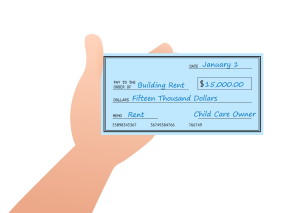 The ideal facility cost for a financially healthy child care business should range between 10% and 20% of annual gross revenues. Facility costs include rent or mortgage payments (interest and principal), property taxes, and building insurance (not to include child care business insurance components); it’s important to distinguish between facility costs and occupancy costs. Occupancy costs would include additional variable expenses such as utilities and maintenance. For the facility cost benchmark, occupancy costs should not be included.
Facility cost is often the second largest expense in a child care business, whether the mortgage payment for the facility (real property—building and land) is owned by the child care business owner or rent paid to the property owner. Financial analysis of facility costs must be considered during the initial planning of constructing a new child care facility, acquiring a child care building, or negotiating lease terms for a child care building. Controlling facility costs is often difficult after the property has been purchased or a rental lease agreement has been signed. Will market tuition rates support the facility costs? At what enrollment level and gross revenue level will the normal facility cost be met?
I joke about child care facilities that are either poorly designed, extremely large, or in general have a large percentage of total building square footage that is considered “unlicensed space” – ginormous lobbies, huge storage areas, oversized hallways, and multipurpose rooms without bathrooms limiting future conversion or other poorly planned layouts. I often refer to them as “Taj MaTeeters.” These immense child care buildings with high construction costs, land costs, and low licensed capacity are always “Teetering” on financial failure. My point is that facility costs are often determined during the planning phase and are very difficult to change after the building is built. When the facility costs prove too high, and facility costs exceed 20% (after a reasonable ramp-up time to gain initial enrollment), business financial resources will constantly be strained – just covering the two largest expenses in most child care businesses – labor costs and facility costs. For example, say labor is running high at 55% of gross revenues, and facility costs are 24% of gross revenues – with 79% of gross revenue going to just two expenses – not a healthy financial picture. Financially healthy child care businesses often have a facility cost of less than 15%.
Food Costs
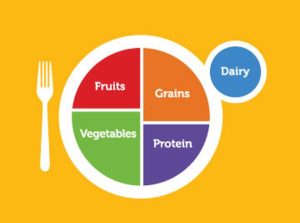 Food costs include food and paper products used to serve food. The benchmark percentage for food costs averages between 6 – 8%. During times of high inflation, this percentage commonly nears 10%. Serving high-quality, nutritious meals and snacks should be the goal of every child care business. A way to offsite food costs is by participating in the federal food program – CACFP. The CACFP allows child care centers to afford high-quality protein, fresh fruits, vegetables, and milk and fruit juices while reimbursing child care businesses to help manage food costs effectively. Aim to be reimbursed 100% for food costs by ensuring all purchases qualify, minimizing food waste, and managing costs efficiently. This includes being reimbursed for food preparation (cooking) and administrative tasks associated with completing paperwork and record-keeping required by the program.
For a large child care center with high enrollment, annual food costs can easily exceed $100,000. Participating in the CACFP and getting reimbursed for all or most of that amount is a substantial financial benefit. I am always surprised at the number of child care businesses (even those struggling financially) that are not participating in the CACFP. It’s FREE money! As I like to say, “Over my decades in child care, I have heard many excuses and reasons as to why “we” do not participate in the Federal Food Program—I just have never heard a good one!” FREE money can go a long way toward helping operate a financially healthy child care business.
Supply Costs
Supplies costs cover several different expense areas – classroom supplies, administrative (office supplies), janitorial supplies, and paper product supplies (bathroom tissue paper and paper towels).
 Supply costs should range from 2% to 5% of annual gross revenues. During the COVID-19 pandemic, supply costs increased significantly due to the need for PPE and cleaning supplies, sometimes reaching up to 10%. Post-pandemic, most centers have seen supply costs decrease to normal.
It may not seem worthwhile putting much effort into decreasing supply costs. And indeed, it should not be the first cost category to focus on reducing. A small decrease in the two highest expenses, labor and facility costs, will significantly impact the child care business’s financial health. However, do not overlook easy ways to save on supply costs, such as buying in bulk commonly utilized supplies like construction paper, copy paper, glue, and supplies used in teachers’ favorite projects and activities.
One of my favorite supply cost control measures is having each classroom adhere to a monthly budget for supply costs. Just as every child care business should plan and operate within a budget, so should each classroom and program. Make developing a supply list based on curriculum and lesson planning that also stays within the classroom/program budget for the month a requirement – you’ll be surprised how creative and good shoppers your teachers will learn to be – without any decreases in program and early education quality.
When considering financial benchmarking for your child care business, it is essential to analyze and compare your current financial data against these established benchmarks. This practice can provide valuable insights and guide you in making strategic adjustments to enhance your business’s financial health, long-term sustainability, and profitability. Start by calculating your labor, facility, food, and supply costs. Work specifically on decreasing labor and, where possible, facility costs. Then, work to decrease food and supply costs. Other than these four key expenses, there are other expenses that you should also review and work to decrease where possible. And remember, controlling costs is not a “one and done” event – you must focus on controlling costs on a “daily” basis; without consistent focus – expenses quickly spiral out of control.